
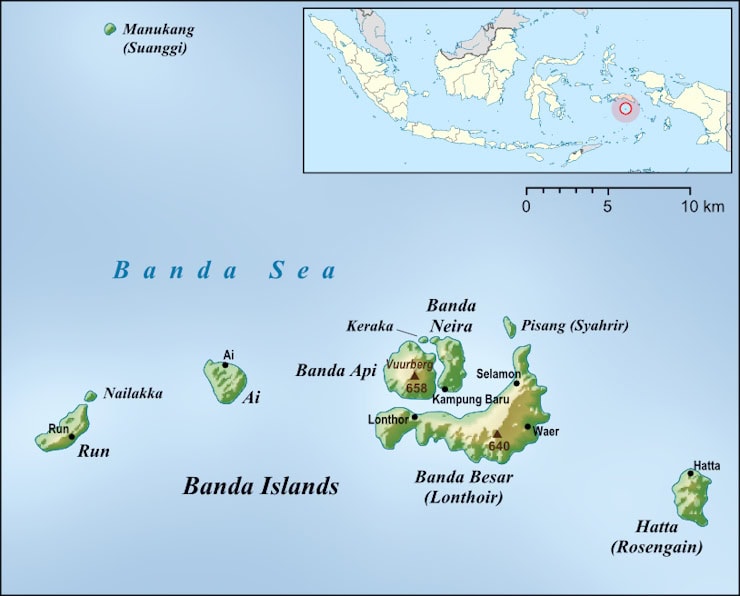
Previously known as New Amsterdam and formerly in the hands of the Dutch,(also known as VOC) in 1664 the settlement, now known as New York, found itself under British rule. How this came about can be traced back to a tiny island called Run, in modern-day Malaysia
June 1665, one of the most famous cities in the world became known by its new name, New York, which was formally adopted and renamed in honour of the Duke of York, brother of King Charles II.
It was previously known as New Amsterdam and in the hands of the Dutch, but after international conflict between expanding and competing empires, the city found itself acquiring a new name and with new rulers, the British. How this happened and why, can be traced back to the tiny Asian island known as Run.
Located in what is now Indonesia, the Banda Islands was a group of islands that became a significant prize for the competing colonial interests of European powers during the Age of Discovery.
This period in history, also known as the Age of Exploration began in the 15th century and lasted almost two centuries, during which time various European powers competed to explore, reach and colonise new lands with the aim of bringing back vast treasures and commodities which would boost their economies back home.
In1609 Henry Hudson, an English explorer, was hired by the VOC to find the elusive and highly sought after route known as the Northeast Passage which many hoped would deliver a shorter more navigable route to Asia.
After coming up against treacherous Arctic conditions to the east, Hudson and his crew decided to sail westwards and landed at Newfoundland. Hudson believed that the passage to the Pacific Ocean could be found in the Americas and began exploring, eventually sailing up the major river which was subsequently named after him.
Once he returned to Europe, Hudson’s reports of new territory with vast potential and fertile land began to stimulate interest, particularly amongst Dutch traders.
Subsequently, Dutch-led expeditions set sail in 1611 and encountered and surveyed the area between Maryland and M in a series of four voyages, with charts using the name ‘New Netherland’ for the first time.
So much history left for you to search.
In the late 18th century, colonists in New York rebelled along with the other Thirteen Colonies, and supported the American Revolutionary War that led to the founding of the United States. British claims in New York were ended by the 1783 Treaty of Paris, with New York establishing its independence from the crown. The final evacuation of New York City by the British Army was followed by the return of General George Washington's Continental Army on November 25, 1783, in a grand parade and celebration.

No comments:
Post a Comment